Cotton Seeds Driving Sustainable Agricultural Development
Sow Hope, Grow New Horizons
Against the backdrop of sustained global population growth (projected to exceed 10 billion by 2050), intensifying climate change and increasing resource constraints, sustainable agricultural development has become a key priority for ensuring food security and maintaining ecological balance. As an important cash crop and a major source of natural fiber, the sustainability of the cotton industry is directly linked to the livelihoods of 100 million households worldwide. Cotton seeds, as the foundation of the cotton industrial chain, play a critical role in driving the green transformation of the cotton industry, improving efficiency and extending industrial value.
Currently, global cotton lint production is projected to reach 28.1 million metric tons by 2032. As a major cotton-producing country, China’s Xinjiang cotton region accounts for 86.2% of the country’s cotton planting area. With mechanized harvesting exceeding 95% and biotechnology-based breeding technologies covering more than 40%, Xinjiang demonstrates a clear trend toward technology-driven transformation in the cotton industry. However, the industry continues to face challenges including saline-alkali land degradation, misallocation of water resources, dependence on external germplasm resources and carbon footprint management.
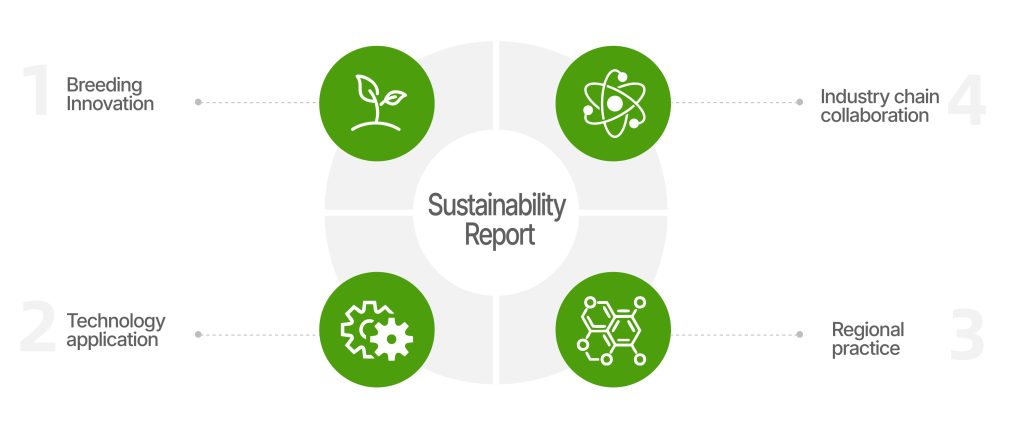
This report examines how cotton seeds contribute to sustainable agricultural development from four key perspectives: breeding innovation, technological application, industrial chain collaboration and regional practices, and provides targeted recommendations accordingly.