HillTide's

Core Products

核心产品链

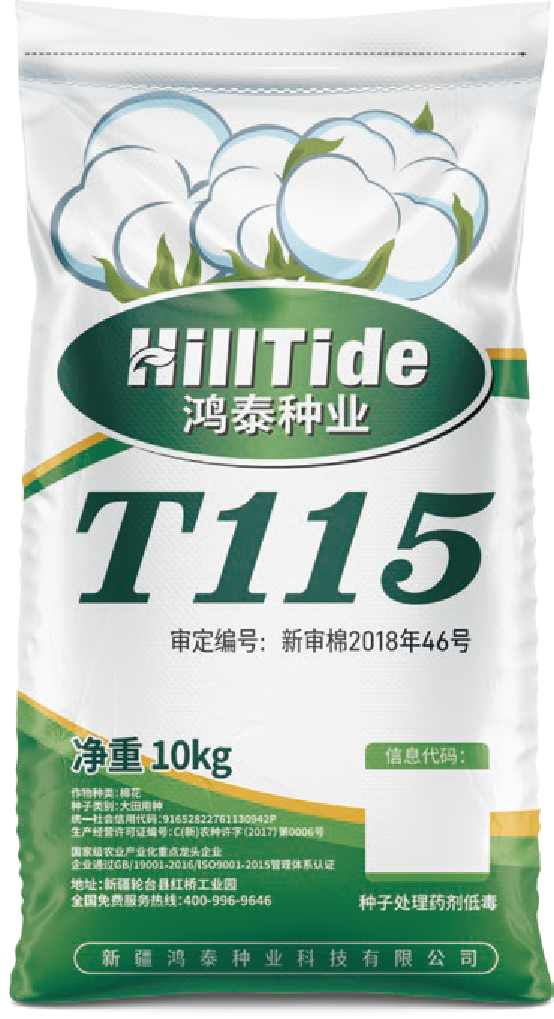
鸿泰T115

此品种为抗虫、耐盐碱高产优质常规品种

This variety is an insect-resistant, salt-tolerant, high-yielding, and high-quality conventional variety.

主要特征特性
/Main features

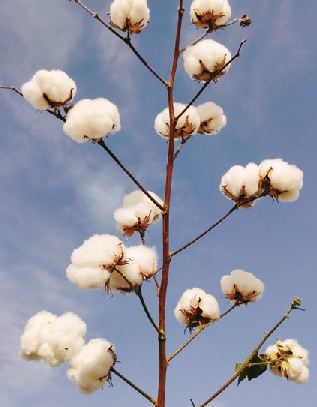
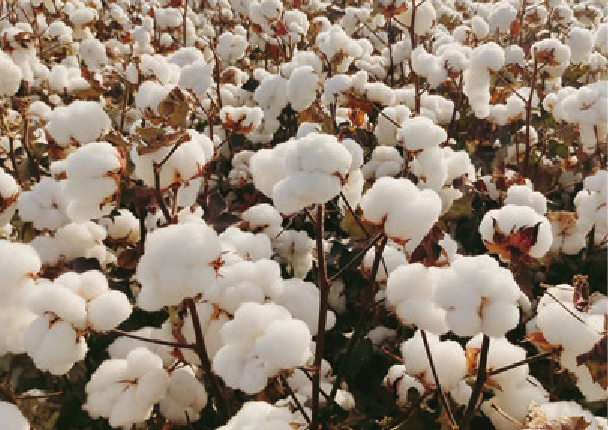
该品种生育期120天左右,株高90-100厘米左右,植株塔型,II式果枝,果枝节位6.2节,茎秆健壮,叶色浓绿,叶片鸭掌型,叶片中等偏小,整齐度好,生长势强,果枝上举,通风透光好。适应性广,抗病性较强,抗枯萎、耐黄萎病,结铃性强而集中,铃椭圆型,铃大壳薄,吐絮肥畅集中,棉絮肥大洁白,含絮好,早熟性较好。平均单铃重5.7克左右,锯齿衣分45.2%,棉纤维品质较好,经农业部检测中心检测:中上部纤维平均长度29.5mm,断裂比强度31.4cN/tex,马克隆值4.4,整齐度85.6%,伸长率6.7

This variety has a growth period of approximately 120 days, a plant height of 90-100 cm, a pyramidal plant shape, type II fruiting branches, fruiting branch nodes at 6.2 nodes, robust stems, dark green leaves, duck-foot shaped leaves, medium to small leaves, good uniformity, strong growth vigor, upward-pointing fruiting branches, and good ventilation and light penetration. It has wide adaptability, strong disease resistance, resistance to wilt and Verticillium wilt, strong and concentrated boll setting, oval bolls, large bolls with thin shells, smooth and concentrated boll opening, large and white cotton fibers, good lint content, and good early maturity. The average single boll weight is approximately 5.7 grams, the serrated lint percentage is 45.2%, and the cotton fiber quality is good. According to the Ministry of Agriculture Testing Center, the average length of the upper and middle fibers is 29.5 mm, the breaking strength is 31.4 cN/tex, the micronaire value is 4.4, the uniformity is 85.6%, and the elongation is 6.7.

大田生产中突出特点
Key features in field production

耐干旱、抗高温

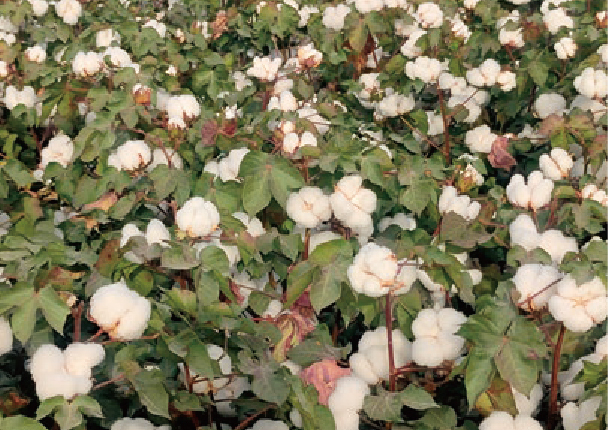
株型清秀,透风透光好

抗枯耐黄衣分高多

耐盐碱,抗棉铃虫

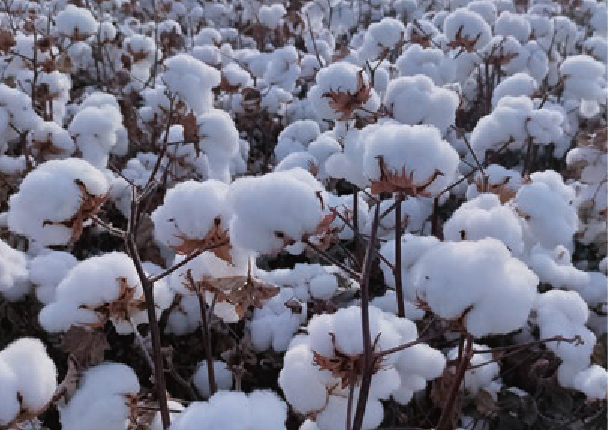
含絮力好,铁杆抗倒伏,宜机采

结铃性超强,双铃三铃多,每瓣十籽多

● Salt and alkali tolerant, resistant to bollworms

● Good lint-forming ability, strong stems resist lodging, suitable for machine harvesting

● Excellent boll-forming ability, producing many double and triple bolls, with more than ten seeds per leaf

● Drought-tolerant and heat-resistant

● Sleek plant shape, good ventilation and light penetration

● Resistant to blight and yellowing, high percentage of bark stalks

主要栽培管理措施
Main cultivation and management measures

适时播种:一般4月上、中旬播种,5厘米地温稳定通过14°C为适宜播期。


合理密植:播种密度21-24万株/公顷,收获密度18-21万株/公顷。2.05米地膜采用一膜三行22-24穴为最佳。


水肥管理:施足底肥,稳施蕾肥,重施花铃肥,补施盖顶肥,开花后要求大水肥,适当进行锌肥、硼肥等叶面追肥。


合理化调:掌握全程化控,早控、轻控、勤控,打顶后5-7天控一次90-120克/公顷,5-7天重控一次150-225克/公顷。


病虫害防治:及时防治蚜虫、蓟马、红蜘蛛、盲蝽蟓等害虫。重病田不适宜种植。中、轻病田可在头水至三水,随水滴施枯草芽孢杆菌。
● Timely Sowing: Generally, sowing is done in early to mid-April, with a suitable sowing period when the soil temperature at a depth of 5 cm consistently exceeds 14°C.


● Reasonable Planting Density: Sowing density is 210,000-240,000 plants/hectare, and harvest density is 180,000-210,000 plants/hectare. For 2.05-meter mulch film, a planting density of one film for three rows and 22-24 holes is optimal.


● Water and Fertilizer Management: Apply sufficient base fertilizer, apply fertilizer during bud formation, apply heavy fertilizer during flowering and boll formation, and supplement with top dressing fertilizer. After flowering, heavy water and fertilizer are required, and foliar fertilization with zinc and boron fertilizers is appropriate.


● Rational Chemical Control: Master the entire chemical control process, controlling early, lightly, and frequently. After topping, apply 90-120 grams/hectare every 5-7 days, and then apply a heavier dose of 150-225 grams/hectare every 5-7 days.


● Pest and Disease Control: Timely control of pests such as aphids, thrips, spider mites, and mirid bugs. Severely diseased fields are not suitable for planting. For fields with moderate to mild disease, Bacillus subtilis can be applied via drip irrigation during the first to third irrigation.